Why your brand needs to show up in AI-generated answers
When someone asks an AI which company solves the problem you solve, the answer comes ready-made and names only a few brands. GEO is the work of getting yours on that list. AEO is making your content the answer. Both start by measuring where your brand stands today.
36%
of informational Google searches already show AI Overviews, vs. 5% of transactional ones
900M
people use ChatGPT every week, according to OpenAI (February 2026)
Up to 40%
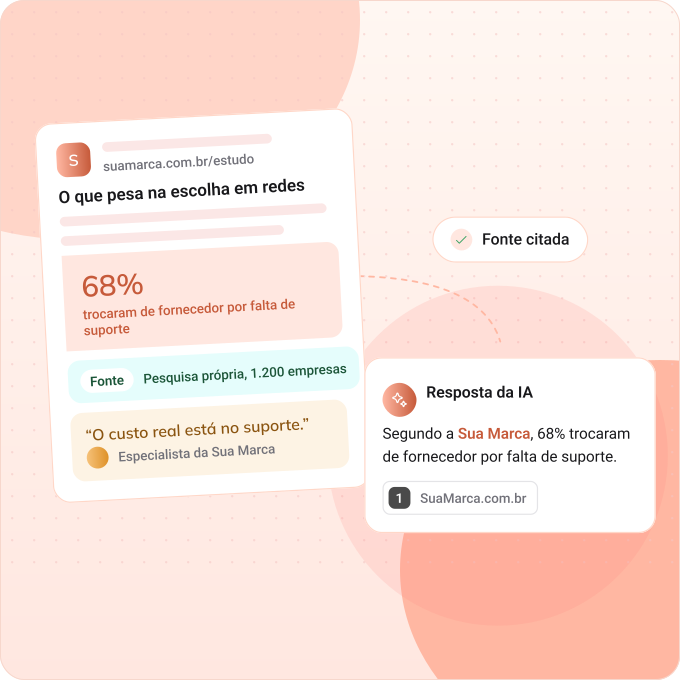
more visibility in generative engines when content cites sources, data and expert quotes
Sources: Seer Interactive, OpenAI, “GEO: Generative Engine Optimization” study (ACM SIGKDD 2024)
GEO
Want AI to recommend your brand?
Deliverables that put your brand inside the answer
At Ecto, GEO isn’t a standalone service: it’s a layer on top of the in-depth SEO we already do. We measure where your brand shows up in AI tools today, work on content, structure and authority, then rerun the same set of questions to show what changed.
AI visibility audit
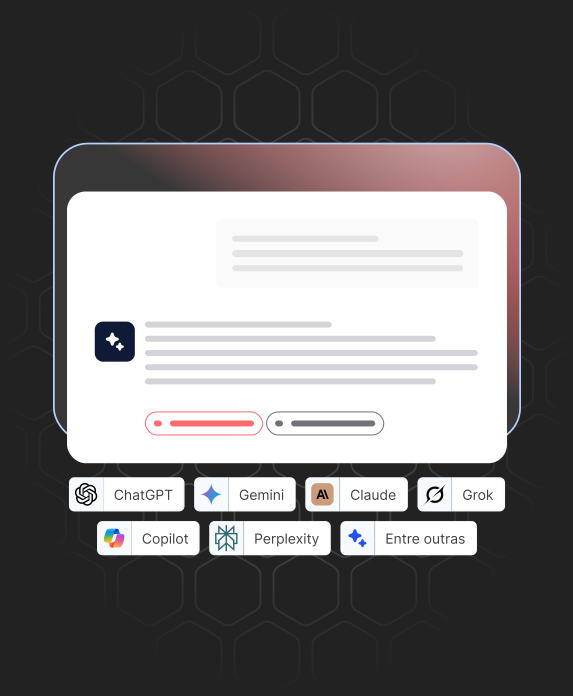
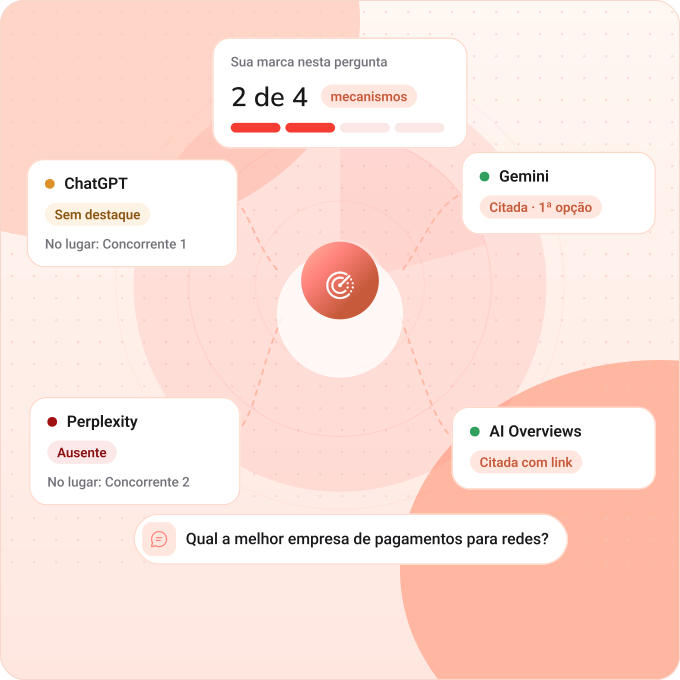
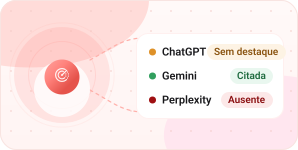
We measure how often your brand shows up in ChatGPT, Gemini, Perplexity and AI Overviews, in what context and in whose place.
Your market's question map
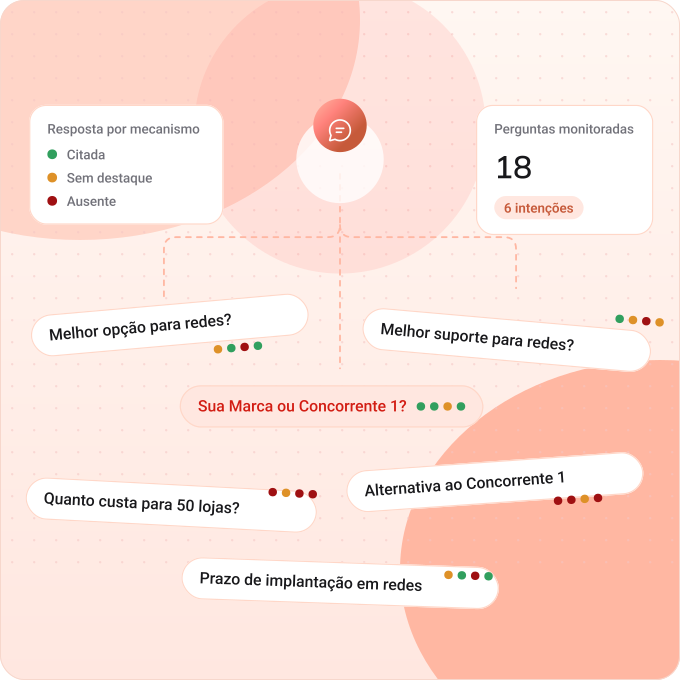
We map the questions your customers ask AI tools, grouped by intent, and which brands show up in each answer.
Citation-ready content
We produce content backed by proprietary data, sources and expert quotes, in the format AI models prefer to cite.
Direct answers (AEO)
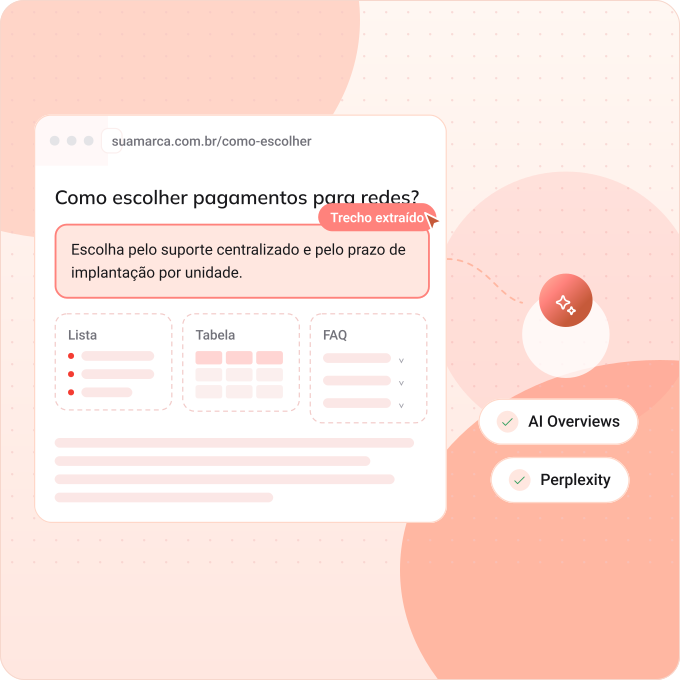
We structure pages with the answer up front, plus lists, tables and FAQs, so the right passage gets pulled into the answer.
Technical foundation and structured data
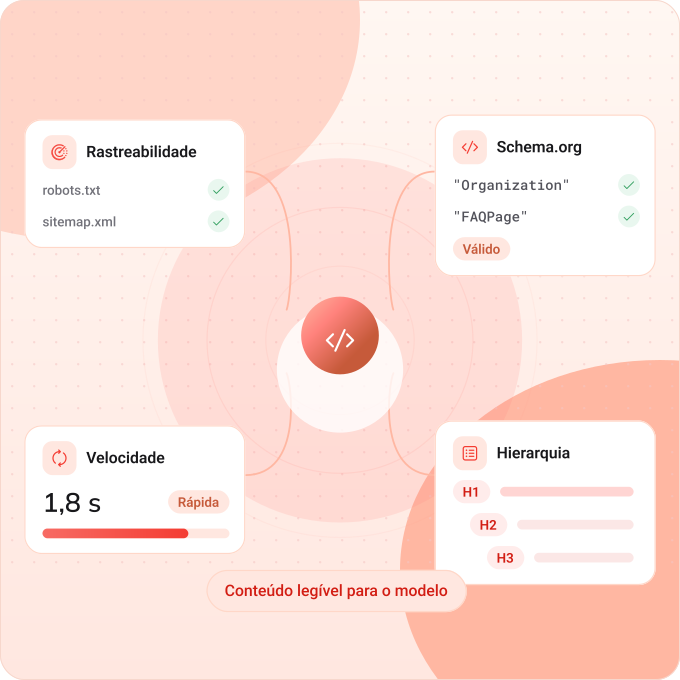
We ensure crawlability, speed, a clear heading hierarchy and structured data (Schema.org) so AI models can read your content.
Authority and external mentions
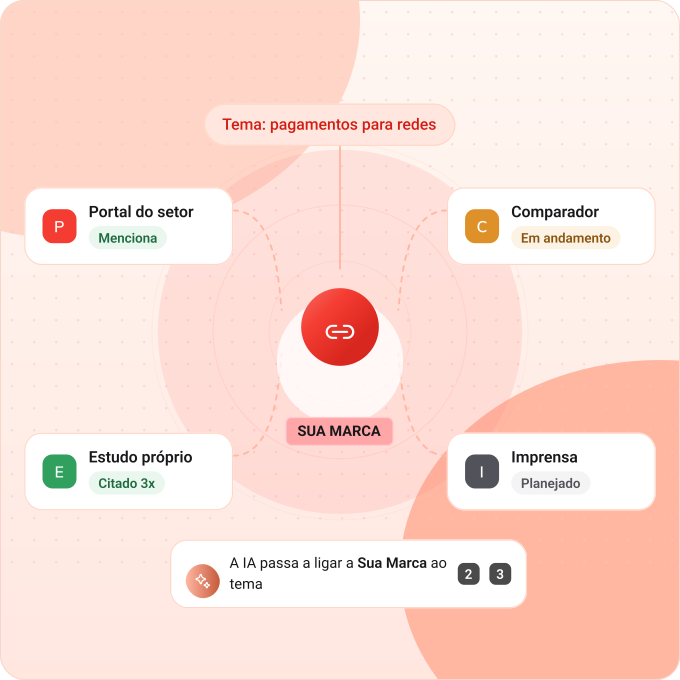
We expand your mentions across publishers, comparison sites, press and studies so AI associates your brand with the topic.
Share of voice and monitoring
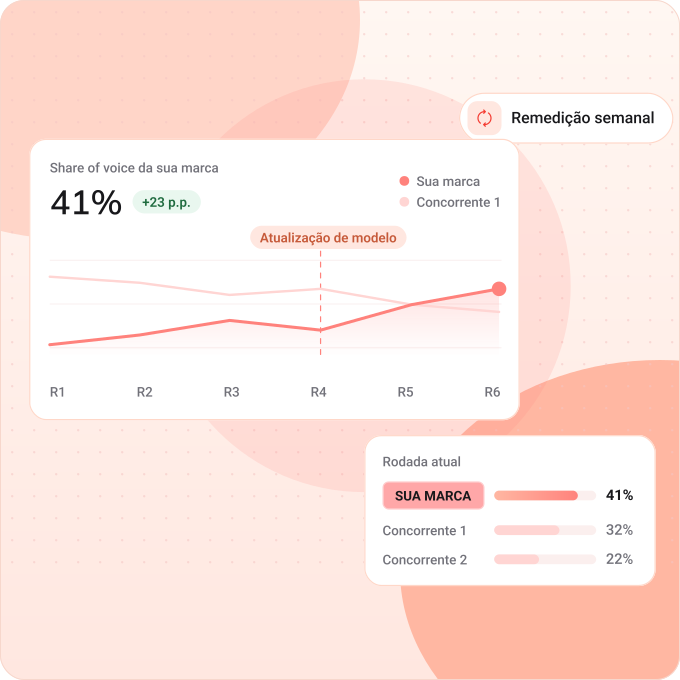
We re-run the same questions every cycle and track your brand’s share of voice against competitors.
Tool-based tracking
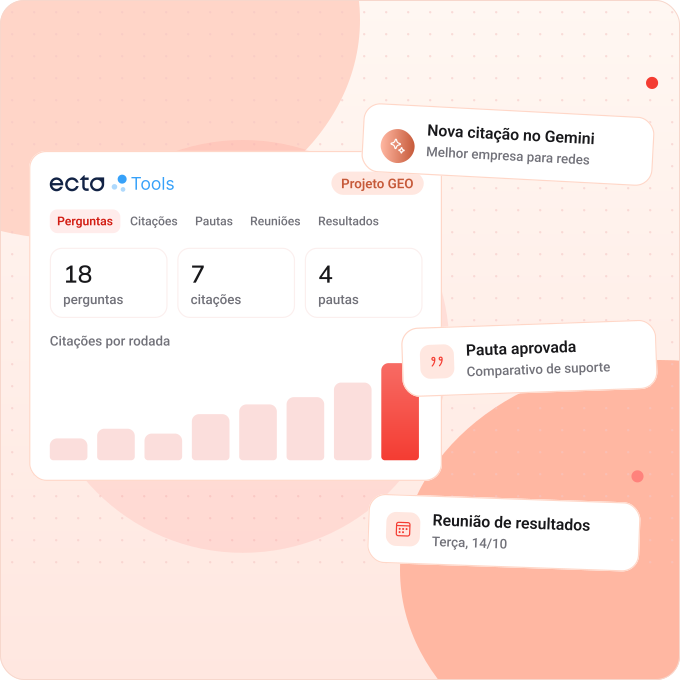
You follow questions, citations, content plans and meetings in Ecto Tools, with an alert for every new citation.
Find out whether AI is citing your brand or your competitor's
Leave your contact details and your website address. We’ll email you an audit showing the questions in your market where your brand appears, where it doesn’t, and who gets cited instead.
Method
Measure, act, measure again
How we run a citation-focused GEO project
Every project includes ongoing monitoring of search intent. Between monitoring cycles, we work on content, technical structure and authority, with clear priorities and recurring deliverables.
01
Baseline
We map how your brand appears across the leading AI tools (ChatGPT, Gemini, Perplexity and Claude) for the questions your audience asks. We record whether your brand appears, how it’s described and which competitors show up when it doesn’t.
02
Deep dive and analysis
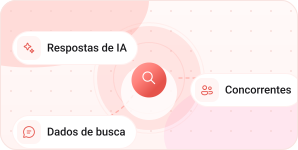
We cross-reference AI answers with your site’s search data, your audience’s intent and your competitors’ presence to understand why they get chosen.
03
Opportunities and strategy
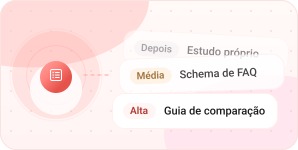
We define which questions are worth competing for, what content to create or rewrite, which technical fixes come first and which authority signals need to be built.
04
Execution and tracking
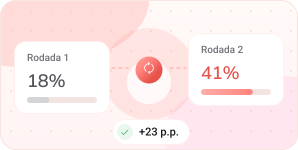
We execute in order of impact and then repeat the initial measurement. The gains show up in the comparison between the two rounds, not in estimates.
The same measurement, again
GEO and SEO
One layer on top of the other
GEO doesn't replace SEO. It builds on top of it.
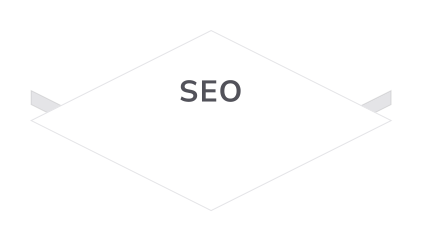
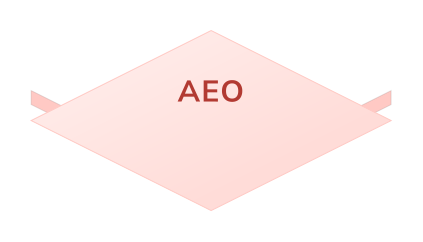
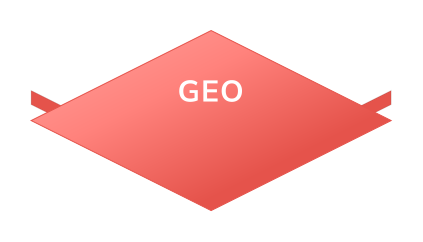
Ranking well on Google doesn’t, on its own, guarantee that your brand will be cited in an AI-generated answer: each environment selects and presents information in its own way. The foundation is still structure, content and speed. What changes is where results show up and how they’re measured. Below are the acronyms you’ll hear and what each one solves in practice.
- GEOThe brand gets cited and recommended
- AEOThe page becomes the answer
- SEOThe foundation: structure, content and speed
GEO (Generative Engine Optimization)
Optimization for engines that answer with generated text, such as Google's AI Overviews, ChatGPT and Perplexity. We work on format, context and authority so your brand makes it into the answer.
AEO (Answer Engine Optimization)
We structure content to be the best answer to a direct question, rather than just ranking for a keyword: the answer up front, with lists, tables and FAQs.
LLMO (Large Language Model Optimization)
Content and structure built to be read, cited and prioritized by models like ChatGPT, Gemini and Claude. Language, context, sources and organization.
SXO (Search Experience Optimization)
When AI sends someone to your page, the experience does the rest: navigation, load time, structure and design that keep the visit going.
OSO (Organic Search Optimization)
Search beyond Google: YouTube, Amazon, app stores and social media, which also feed what the models know.
Success stories
The brand AI cites is the brand that already has authority
GEO is built on the SEO Ecto already delivers
Generative models cite the sources they can read, understand and trust. The results below come from Ecto’s SEO projects and show the authority foundation that our GEO work builds on.
+129% no tráfego orgânico desde o início da consultoria
+140 mil cliques em menos de 6 meses
+58% no tráfego orgânico com +26 p.p. em tráfego non-brand
Want to know whether AI is recommending your brand or your competitor's?
Scenarios where SEO makes a difference
GEO work varies depending on your brand’s starting point and the kind of question that drives buying decisions in your market. Here are some scenarios where it tends to be urgent:
By problem:
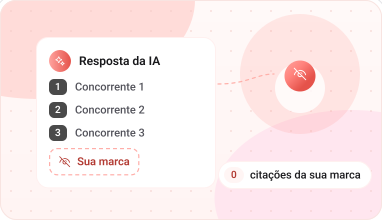
Brand invisible to AI
Your category already shows up in AI answers, but your brand is never cited.
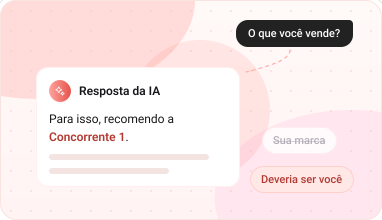
Competitor cited instead of you
AI recommends another company when the question is about exactly what you sell.
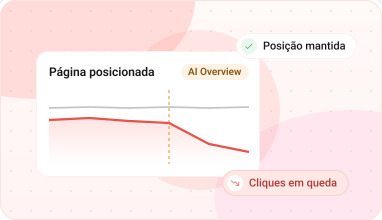
Fewer clicks due to AI Overviews
Your content still ranks, but clicks dropped once the answer started appearing ready-made.
By industry:
E-commerce
Product pages and categories prepared for comparison and recommendation right inside the answer.
SaaS and B2B
Competing for comparison, alternative and "best tool" questions for each use case.
Blogs and Portals
Reference content structured to be the cited source, not just another link on the list.
Local Businesses
Recommending locations and services when the question has a city or neighborhood context.
Brands with proprietary data
Original research and studies turned into material AI has a reason to cite.
Brand or product launches
Building presence from scratch, when there's no history yet for models to read.
Technology
Market intelligence + proprietary solutions
Tools that power your GEO strategy
There’s still no universal way to measure GEO results. That’s why we combine market platforms, Google’s own data and our own measurement across AI tools, always with the same set of questions, so each round can be compared with the next.
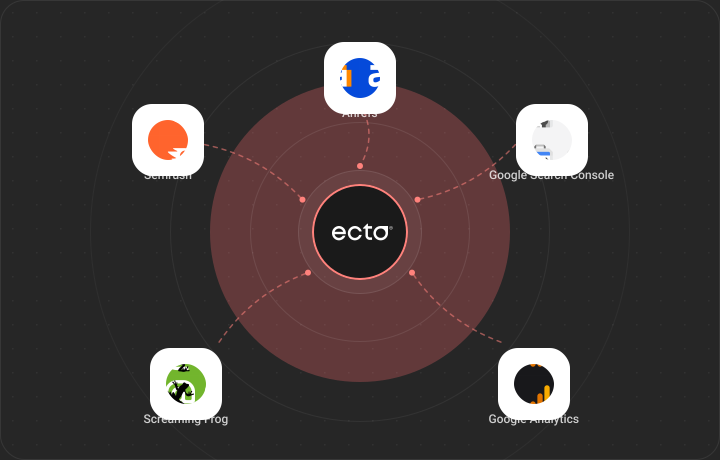
Market tools we use
Semrush and Ahrefs to track mentions and citations in AI search experiences, Google Search Console for AI Overviews and AI Mode data, and Screaming Frog and Google Analytics to support the technical foundation.
- AI mentions and citationsSemrush and Ahrefs
- AI Overviews and AI ModeGoogle Search Console
- Technical foundationScreaming Frog and Google Analytics
Ecto's Proprietary Tools
We combine the best market tools with custom solutions built by Ecto.
AI Visibility Monitor
Every week, it runs your industry’s questions in ChatGPT, Gemini, Perplexity and Claude and records whether the brand appears, its share of voice, how it’s described and who takes its place when it doesn’t.
Citations per week
Rounds 1 to 8| W1 | W2 | W3 | W4 | W5 | W6 | W7 | W8 | |
|---|---|---|---|---|---|---|---|---|
| ChatGPT | low | low | medium | low | medium | medium | high | high |
| Gemini | medium | medium | medium | high | high | high | very high | very high |
| Perplexity | no citations | no citations | low | low | low | medium | medium | high |
| Claude | no citations | low | low | low | medium | medium | medium | high |
Ecto Tools
A platform that brings the whole project together: tracked questions, content topics, citations earned, meetings and results, with full visibility for your team.
SEO Radar
Continuous monitoring of titles, descriptions, robots.txt and other critical elements, with automatic alerts. A silent change can undermine how AI reads your site.
Locasty
Our proprietary platform for local presence at scale. For multi-location chains, it keeps data, reputation and information consistent everywhere AI looks.
Frequently Asked Questions
GEO is a new discipline, and it’s full of overblown promises. Below is what Ecto does, what can be measured today and what can’t yet.
Want to see where your brand stands today?
The audit shows the questions in your market where you appear, where you don’t, and who gets cited instead.
GEO, short for Generative Engine Optimization, is a set of optimizations that increase the chances of a brand being understood, cited and recommended by generative AI tools such as ChatGPT, Gemini and Perplexity, as well as Google's AI Overviews. The term was formalized in 2023, in a study later presented at the ACM SIGKDD conference. People no longer search just to get a list of links: they want ready-made, objective answers to their needs.
AEO (Answer Engine Optimization) prepares a page to be the direct answer to a question: the answer comes first, supported by lists, tables and FAQs. GEO is broader: it works on content, technical structure and authority so the brand gets cited and recommended in AI-generated answers. In practice, AEO is one of the deliverables of a GEO project.
No. GEO builds on top of SEO. AI tools rely on content they can crawl, understand and trust, which is exactly the foundation SEO builds: technical structure, relevant content and authority. What changes is where results show up and how they're measured.
An AI visibility audit across the main AI tools, a map of the questions in your market, citation-ready content, pages structured for direct answers (AEO), technical and structured data improvements, authority-building and external mentions, and recurring re-measurement with the same questions, all tracked in Ecto Tools.
Every round, we run the same set of questions in ChatGPT, Gemini, Perplexity, Claude and AI Overviews, and record whether the brand appears, how it's described, its share of voice against competitors and who gets cited when it doesn't. The result is the comparison between rounds, complemented by data from Search Console, Semrush, Ahrefs and Google Analytics.
It depends on the brand's starting point, the competition and the type of question. Structural and content improvements to pages that are already indexed usually show up in the re-measurement rounds during the first few weeks. Gains that depend on authority and external mentions take longer. That's why we measure in rounds, not with estimates.
There's no file or markup that guarantees a citation. Structured data (Schema.org), a crawlable site and a clear heading hierarchy help models read your content and are part of the project's technical foundation, but citations depend above all on useful, specific and trustworthy content.
Keyword stuffing, publishing generic content at scale, hiding essential content in images or scripts, and promising guaranteed placement in answers. GEO research points the other way: what increases visibility is citing sources, bringing in data and including expert quotes.
E-commerce businesses, SaaS and B2B companies, blogs and publishers, local businesses and multi-location chains, brands with proprietary data and brands that are launching. The work varies depending on the brand's starting point and the kind of question that drives buying decisions in your market.